Wasco State Prison — Basic Information
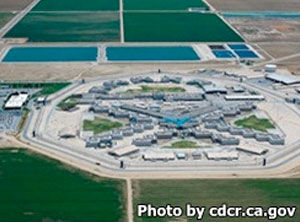
Wasco State Prison is a medium custody facility for 1,000 inmates, as well as a 4,580-bed reception center. Reception centers are facilities that receive inmates for the California Department of Corrections & Rehabilitation (CDCR) to thoroughly review their background, mental health, and physical health to determine the most appropriate facility for their needs.
The physical address for Wasco State Prison is:
701 Scofield Avenue Wasco, CA 93280
If you wish to mail your loved one a letter at Wasco State Prison, you will need to use a different mailing address based on where they are housed in the facility (see below).
If you wish to contact the facility, the main phone number is (661) 758-8400. This phone number will not let you reach an inmate. You cannot call your loved one, though you can receive outgoing collect calls from them.
- Basic Information About Wasco State Prison
- Visiting an Inmate at Wasco
- Mailing Letters & Packages
- Reducing an Inmate’s Sentence
- Appeals, Writs, and Applications to Overturn Convictions
Visiting and Inmate in Wasco State Prison
If you wish to visit a relative or friend at Wasco State Prison, you should ask them to send you CDCR Form 106. You need this form, signed by the inmate, to complete and send to the CDCR. It is your application to be able to visit your loved one. The CDCR will review the completed application, conduct a background check, and approve or deny you the privilege of visiting. If you are denied, depending on the reason, you may be able to correct the issue and have your application approved.
Once you are approved by the CDCR to visit that individual, then you may schedule a visit through the Visitor Processing Appointment Scheduling System, known as VPASS. You will need to create an online account.
Visiting hours at Wasco State Prison are Saturdays and Sundays 8 AM to 3 PM. and on certain holidays. To visit your loved one at your scheduled time, you must have a valid and current form of identification. If you are bringing a minor to visit your loved one, you will need a certified copy of their birth certificate. If you are the child’s legal guardian, you must bring proof of your lawful guardianship, and if you are neither the child’s parent nor their legal guardian, then you must have a notarized written consent authorization form signed by the minor’s parent or guardian.
- Basic Information About Wasco State Prison
- Visiting an Inmate at Wasco
- Mailing Letters & Packages
- Reducing an Inmate’s Sentence
- Appeals, Writs, and Applications to Overturn Convictions
Mailing Letters and Packages to Your Loved One at Wasco State Prison
When your loved one is incarcerated at Wasco State Prison, you can send them letters as long as you know their full name, inmate ID number, and the facility in which they are housed.
Mailing address for inmates include:
- Facility A 701 Scofield Ave. P.O. Box 4400 Wasco, CA 93280
- Facility B 701 Scofield Ave. P.O. Box 5500 Wasco, CA 93280
- Facility C 701 Scofield Ave. P.O. Box 6600 Wasco, CA 93280
- Facility D 701 Scofield Ave. P.O. Box 7700 Wasco, CA 93280
- Facility E 701 Scofield Ave. P.O. Box 3300 Wasco, CA 93280
- Facility H 701 Scofield Ave. P.O. Box 9900 Wasco, CA 93280
While you can send letters to your loved one, you are not free to send whatever type of packages you want. You can only send quarterly or religious packages from private vendors authorized by the CDCR.
Additionally, if you wish to send money to your loved one currently incarcerated at Wasco State Prison, you may be able to use a lockbox service (sending a check or money order), an electronic funds transfer (using credit or debit card), or mail funds directly to the facility in the form of a check or money order made out to the inmate.
- Basic Information About Wasco State Prison
- Visiting an Inmate at Wasco
- Mailing Letters & Packages
- Reducing an Inmate’s Sentence
- Appeals, Writs, and Applications to Overturn Convictions
Reducing the Sentence of a Wasco State Prison Inmate

Prison inmates are often unaware of the possible ways to reduce a sentence and get released early from prison.
The categories of sentence reductions are discussed below. The law-based methods are then explained in more detail in the following section, called Appeals, Writs, and Applications to Overturn Convictions.
Main Categories of Sentence Reduction Methods
- Good Behavior & Work Credit Wasco State Prison inmates can earn credit for good behavior, working, and complying with other programming requirements that are available in Wasco. Some sentences require 85% of the sentence to be served in prison while other sentences only require 50%. Obtaining release after the 85% or 50% of the time has occurred will require good behavior. In extraordinary circumstances the California Department of Corrections and Rehabilitation (CDCR) can release inmates even earlier than these 85% and 50% thresholds, and early release for factors unrelated to the inmate (including overcrowding) has occurred in California places of custody. Contact a criminal appeals attorney to find out more information about good behavior and work credit. The best practice is always to follow all prison rules, treat guards and other inmates with respect, and to truly become the model citizen that you hope to be if you’re granted early release.
- Challenging Legality of Conviction Various methods exist that allow a Wasco State Prison inmate to challenge his or her conviction. A challenge to a conviction is frequently based on a violation of the inmate’s rights during the course of the trial or other proceedings. If successful, a conviction can be overturned, which may result in a new trial or a dismissal of the case. In California, some overturned convictions lead to an inmate’s immediate release from prison. These methods are discussed in more detail in the section below, entitled Appeals, Writs, and Applications to Overturn Convictions.
- Challenging Legality of Sentence An illegal sentence occurs when an aspect of the sentence violates the law. For example, if an inmate was sentenced to multiple consecutive sentences when the law only allowed a concurrent sentence, then a post-conviction challenge would result in a reduction of the sentence. The most common types of illegal sentences frequently involve improper use of enhancements, impermissible consecutive sentencing, and failure to designate a basis for imposing a high term. More information is available in the Appeals, Writs, and Applications to Overturn Convictions section below. You can also contact SPCRC's Recommended California Lawyers if you wish to learn about what applies to your particular case.
- Applications for Sentence Reductions California law allows for a number of applications that can result in a reduction of sentence. Most of these applications are based on the inmate’s character, including participating in educational programming, good behavior, moral actions, family support outside of prison, and other mitigating circumstances. Some examples of sentence reduction applications include AB 2942, Application for Commutation of Sentence, Franklin hearings, etc. Applications for sentence reductions are different from challenging the legality of a sentence. A sentence reduction application is often based on the inmate’s character, whereas a challenge to the legality of a sentence relates to a legal error or violation of an inmate’s rights. More information about these options are discussed in the Appeals, Writs, and Applications to Overturn Convictions section below.
To learn more about these broad categories of sentence reductions, or to receive an individual assessment of a Wasco inmate's case, contact SPCRC's Recommended California Lawyers.
- Basic Information About Wasco State Prison
- Visiting an Inmate at Wasco
- Mailing Letters & Packages
- Reducing an Inmate’s Sentence
- Appeals, Writs, and Applications to Overturn Convictions
Appeals, Writs, and Applications to Overturn Convictions
Wasco State Prison inmates are eligible for various types of post-conviction relief, depending of the facts of their cases. Experienced criminal appeals attorneys typically consider the options listed below for clients at Wasco. For a more detailed explanation of the various options, contact SPCRC's Recommended California Lawyers.
The likelihood of success for post-conviction relief varies greatly, ranging from extremely unlikely methods (e.g., writ of error coram nobis) to methods that regularly result in life sentences being overturned throughout California (e.g., SB 1437). The likelihood for any given client completely depends on the facts of his or her case.
Top Strategies Available to Wasco Inmates
These strategies are available to certain Wasco State Prison inmates whose cases warrant the below relief.
1. Direct Appeals
- Appeal After Trial A direct appeal is available to Wasco inmates in matters where they were recently convicted. Usually, a Notice of Appeal must be filed within 60 days after the date of sentencing. A direct appeal would raise issues that are present on the trial record. For example, a judge’s mistaken ruling on evidence or a prosecutor’s improper argument may be raised in a direct appeal. These appeals go the California Court of Appeal, although they can also be raised in the California Supreme Court in certain circumstances.
- Appeal After Other Ruling Generally speaking most final rulings in trial courts can be appealed to the California Court of Appeals. Thus, the direct appeal method can be used if the trial court (“Superior Court”) denies certain relief, including a denied SB 1437 Petition.
2. Writs
- Writ of Habeas Corpus A writ of habeas corpus generally raises issues that were outside the trial record. For example, if a witness admitted to a friend that he or she was lying during the trial (but such a statement is not recorded in court) that type of information would go into a writ of habeas corpus. Common writ of habeas corpus arguments include (1) ineffective assistance of counsel, (2) actual innocence, (3) prosecutorial misconduct, and (4) various other arguments related to matters outside the trial record.
- Writ of Error Coram Nobis A writ of error coram nobis is filing used to correct a fundamental error that does not fall into one of the categories of other appeals or writs. It is very rarely filed, although it is still used. An example of a writ of error coram nobis might be a filing seeking to overturn a sentence because the sentencing judge was not aware that the defendant was mentally incapacitated.
3. Applications
- Application for Commutation An Application for Commutation of Sentence is an application for a sentence to be shortened. (To “commute” something is to cut it short). Commutation Applications are sent to the Governor’s Office. The last two batches of commutations (as of the time of this writing) occurred in December and August. During the December commutation, outgoing Governor Jerry Brown cut short the sentences of over 150 inmates, and twenty of those people had been convicted of murder.
- PC 1170(d)(1) New law AB 1812 (passed in June 2018) modifies Penal Code section 1170(d)(1) to allow a judge to modify an inmate’s sentence if doing so is “in the interest of justice.” This avenue of relief usually involves an application to the CDCR, endorsed by a CDCR employee, recommending such a resentencing.
- Other Applications Other applications for sentence reduction exist, including recently-passed AB 2942 (involving applications to the District Attorney’s Office) as well as other submissions that involve the character of the inmate. Speak to a criminal appeals lawyer to learn more details.
4. Unique Circumstance Petitions
- SB 1437 Experienced appeals attorneys have used the new law SB 1437 to overturn life sentences for inmates who had been convicted of murder. SB 1437 (also known as PC 1170.95). The law allows for the removal of a murder conviction that had been obtained under the old “felony murder” law. “Felony murder” involves a case where an inmate had been convicted of murder due to a felony he or she participated in, and when the inmate had not actually been the one to kill the victim. A classic example of a case falling under SB 1437 would be a bank robbery where a co-defendant shot a gun that killed the victim.
- Franklin Hearing A recent change in the law allows “Franklin Hearings.” A Franklin Hearing is a request for a re-sentencing that takes into account the youth, inexperience, and immaturity of an inmate who committed a crime prior to his or her 26th birthday. The hearings are supposed to take into account that people under the age of 26 are not fully matured and therefore are less morally culpable relative to an older perpetrator.
For an individualized case assessment for a Wasco State Prison inmate, contact SPCRC's Recommended California Lawyers.
Learn from Experienced Appellate Attorneys

Top appellate law firms have represented numerous Wasco State Prison inmates in post-conviction cases.
A successful record is largely based on:
- Diligent research: Research and investigation are key first steps in fighting wrongful convictions.
- Strong advocacy: Forceful advocacy is often necessary to explain to the court or agency why the inmate is entitled to relief.
- Experience winning cases: Top appellate law firms have experience knowing what actually works. While prior results do not guarantee a similar outcome on a future case, a firm's track record shows what it is capable of.
To learn more about the options that might apply to someone you know at Wasco State Prison, contact SPCRC's Recommended California Lawyers for a consultation.