Winning Your Domestic Violence Case
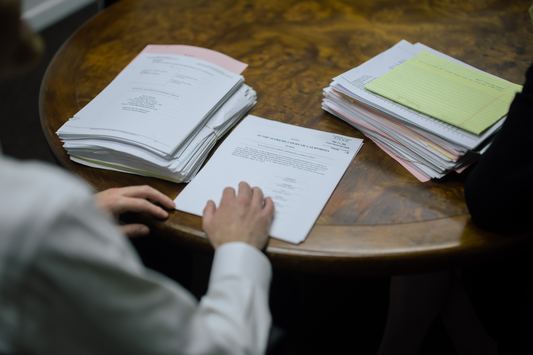
Winning a dismissal or other favorable outcome on a domestic violence case requires skilled representation. experienced criminal defense attorneys fights to defeat domestic violence charges by carrying out some of the steps below, when appropriate.
- File Legal Motions to Dismiss Case: A legal motion is a formal legal request for a judge to take an action that is supported by the law. experienced criminal defense attorneys regularly files legal motions to dismiss, motions to suppress illegally-obtained evidence, and motions to further limit the liability of the client. A successful motion to dismiss results in the complete dismissal of the case.
- Prepare Persuasive Character Packet: experienced criminal defense attorneys frequently prepares a comprehensive character packet about the client so that this information can be presented to the prosecutor and/or the judge. A character packet highlights the good character of the client, the lack of a serious criminal record, and the potential circumstances surrounding the incident. The goal of such a packet is to show how the client is not a criminal and does not deserve to be sent to jail or given a permanent criminal record.
- Investigate Facts to Challenge Prosecutor’s Evidence: Criminal charges are often filed after the prosecutor is presented with only one side of the story. experienced criminal defense attorneys commonly reviews the facts presented, subpoenas documents, and otherwise finds evidence that the prosecutor was unable or unwilling to discover.
these attorneys have obtained successful outcomes on domestic violence cases due to many of the steps outlined above. Contact a qualified defense firm for a free consultation and to learn what steps may be helpful on your case. SPCRC's Recommended Lawyers.
Please note that prior successful outcomes for other experienced criminal defense attorneys clients do not guarantee a similar outcome on a future case. Winning a domestic violence case can include getting the case dismissed, getting a “dismissal” prior to the formal filing of charges by convincing the prosecutor not to file charges on the first court date, arranging for a favorable plea deal, winning a legal motion that disposes of the case, or obtaining a favorable verdict from a judge or jury.
- Winning Your Domestic Violence Case
- Common Domestic Violence Crimes
- Defenses to Domestic Violence Charges
- About DV Protective Orders
- Picking a Domestic Violence Lawyer
Commonly Domestic Violence Laws in California
In California, there is not just one statute that makes domestic violence a crime. Instead, there are several statutes that define different types of domestic violence as separate crimes, such as:
- Crimes against intimate partners;
- Crimes against children; and
- Crimes against elders or dependent adults.
Crimes Against Intimate Partners
Two of California’s most commonly used domestic violence laws, domestic battery and willful infliction, only apply when the alleged victim is an intimate partner of the accused. Under those statutes, an intimate partner is:
- A spouse or former spouse;
- A person with whom the accused person is cohabiting;
- A person who is the parent of the accused’s child; or
- A person with whom the accused person currently has, or previously had, a dating or engagement relationship.
Domestic Battery: Cal. Pen. Code § 242 & 243(e)(1)
California law defines battery broadly. According to Penal Code § 242, battery is any willful and unlawful use of force or violence upon the person of another. “Willful” means that an act was done willingly or on purpose, not accidentally or through negligence.
The legal standard for “force or violence” is a low one. California courts have said that “the least touching” can qualify as battery, even if it causes no pain or physical injury. What matters is that the touching was done in a harmful or offensive manner. To illustrate, some examples of battery can include:
- Pushing or shoving someone;
- Gripping a person by the wrist; or
- Spitting on someone.
Penal Code § 243 lists the general punishments for battery. Normally, battery is punishable by a fine of up to $2,000 or six months imprisonment in the county jail, or both. However, the punishment is increased to up to one year in the county jail for domestic battery — that is, battery committed against an intimate partner.
Willful Infliction: Cal. Pen. Code § 273.5
Penal Code § 273.5 makes it a crime to:
- Willfully inflict corporal injury
- Resulting in a traumatic condition
- Upon an intimate partner.
A corporal injury is a physical injury. A traumatic condition is a wound or other bodily injury caused by the direct application of physical force. Although the term “traumatic” may suggest that only severe injuries qualify, minor injuries are also covered by this statute. For example, California courts have considered bruises, scratches, and swelling to be traumatic conditions.
Willful infliction can be charged either as a misdemeanor or as a felony. If charged as a felony, the maximum prison sentence is four years in state prison; if a misdemeanor, the maximum sentence is one year in county jail. In either event, a fine of up to $6,000 may also be imposed.
Child Abuse: Cal. Pen. Code § 273d
The Penal Code defines child abuse similarly to how it defines willful infliction. To convict a person of child abuse, the prosecution must prove the following elements:
- The person willfully inflicted cruel or inhuman physical punishment or an injury on a child; and
- The punishment or injury caused a traumatic physical condition to the child.
In this context, a “child” is any person younger than 18. Despite the broad language of section 273d, California law recognizes the right of a parent to reasonably discipline his or her child, including by spanking the child. Whether a parent’s actions are reasonable discipline or child abuse is determined by considering the facts and circumstances of each case.
Like willful infliction, child abuse can be charged as a misdemeanor or a felony. If charged as a felony, the maximum prison sentence is generally six years; as a misdemeanor, the maximum jail sentence is one year. In either case, upon conviction, a person may also be required to pay a fine of up to $6,000.
Abuse of an Elder or Dependent Adult: Cal. Pen. Code § 368
California law also extends special protections against abuse to elders and dependent adults. An elder is any person at least 65 years old. A dependent adult is any person between 18 and 64 who has physical or mental limitations that restrict his or her ability to perform normal activities or protect his or her rights.
California Penal Code § 368 makes it a crime for any person to do any of the following things, among others, to an elder or dependent adult:
- Willfully cause or permit the infliction of unjustifiable pain or mental suffering; or
- Willfully cause or permit injury or endangerment to an elder or dependent adult in the person’s care or custody.
If a person violates section 368 in circumstances likely to produce great bodily harm or death, the crime can be charged as a misdemeanor or felony, punishable by a fine of up to $6,000, imprisonment for up to four years, or both. Otherwise, the crime is a misdemeanor.
Additional Penalties for Domestic Violence
In addition to, or instead of, incarceration and a fine, a court may impose the following orders on a defendant convicted of domestic violence:
- Mandatory domestic violence prevention courses. As a condition of probation, a court may, and usually will, require a convicted defendant to successfully complete a counseling program. If convicted of child abuse, the court must require the defendant to complete at least one year of a child abuser’s treatment program.
- Additional or alternative fees or penalties. If probation is granted to a person convicted of domestic battery or willful infliction, he or she may be required to pay up to $5,000 to a battered women’s shelter and pay for his or her victim’s reasonable costs of counseling.
- Domestic violence protective orders. Upon conviction of willful infliction or elder abuse, a court must consider issuing a restraining order against the defendant, preventing him or her from having any contact with the victim for up to 10 years.
The legal consequences of a domestic violence conviction extend beyond the formal sentence imposed. For example, it can also negatively impact the defendant in the following areas:
- Custody disputes. In custody disputes, if a court finds that a person perpetrated domestic violence against the other person seeking custody or against the children involved within the last five years, then the court must decline to award physical or legal custody to that parent, unless he or she proves doing so would not be detrimental to the best interest of the child. In making such a finding, which does not require a prior conviction, the court will use a broader definition of domestic violence than that described above.
- Firearms rights. Under Penal Code § 29805, someone convicted of misdemeanor battery or willful infliction is prohibited from owning, buying, receiving, or possessing a firearm for a period of 10 years following conviction. Section 29800 imposes a lifetime ban on individuals convicted of any felony. In addition, federal law imposes a lifetime ban on gun ownership and possession for any person convicted of any felony or a misdemeanor crime of domestic violence.
- Immigration status. Federal law specifies that any alien, including a legal permanent resident (i.e., Green Card holder), convicted of a crime of domestic violence or who violates a protective order (discussed below) is deportable.
- Winning Your Domestic Violence Case
- Common Domestic Violence Crimes
- Defenses to Domestic Violence Charges
- About DV Protective Orders
- Picking a Domestic Violence Lawyer
Defenses to Domestic Violence Charges
Given the severe consequences of a conviction for domestic violence, developing a strong defensive strategy is critical for the accused. Below are some of the most common defenses to a domestic violence charge:
- Accident. To be guilty of the crimes described above, a person must have acted willfully. An accidental act won’t support a conviction, as Penal Code § 26 makes clear. However, it is only the act, and not the outcome, that needs to be willful. It is no defense that a person didn’t intend to injure another as badly as he or she did.
- Alibi. If the person accused of domestic violence was not present when the alleged violence occurred, then he or she will generally not be guilty of any crime. Establishing an alibi — that the defendant was elsewhere at that time — will disprove the alleged crime. (Elder abuse, in which a person can be guilty of “permitting” an injury, is an exception to that general rule.)
- Consent. In some circumstances, a person may consent to behavior that otherwise could constitute domestic violence. For example, if spouses take a martial-arts class together, they could each be considered to have consented to at least some injuries caused by the other as part of that class.
- Insufficient evidence. As in every criminal case, the prosecution must prove that a defendant committed domestic violence beyond a reasonable doubt. If the evidence is insufficient to support the charge, then the case may be dismissed, or the defendant may be acquitted.
- Self-defense/Defense of others. California law protects a person’s right to use reasonable force to prevent a crime against oneself or another person or to prevent an illegal attempt to take or injure property by force. This right extends even to the use of lethal force in certain, limited circumstances.
- Winning Your Domestic Violence Case
- Common Domestic Violence Crimes
- Defenses to Domestic Violence Charges
- About DV Protective Orders
- Picking a Domestic Violence Lawyer
Domestic Violence Protective Orders
California courts can also take action to prevent domestic violence, not merely punish it. They can do this by issuing what is known as a domestic violence protective order (or restraining order).
California law distinguishes between two types of domestic violence protective orders (in addition to the order that may be issued following conviction, described above). They differ in who may obtain them, for how long they are effective, and what restrictions they can include.
Ex Parte Emergency Protective Orders: Cal. Fam. Code §§ 6250–6257
An ex parte emergency protective order (“EPO”) can be requested by a law enforcement officer. “Ex parte” means that the order can be issued without notifying the person against whom it is sought that it is being requested or giving him or her an opportunity to challenge it before issuance.
To obtain an EPO, the law enforcement officer must assert reasonable grounds to believe any of the following:
- A person is in immediate and present danger of domestic violence;
- A child is in immediate and present danger of abuse by a family or household member;
- A child is in immediate and present danger of being abducted by a parent or relative; or
- An elder or dependent adult is in immediate and present danger of abuse.
A court will issue an EPO if it finds that it is necessary to prevent the occurrence or recurrence of domestic violence, child abuse, child abduction, or abuse of an elder or dependent adult. Among other things, the EPO may include:
- An order that the person against whom it is issued shall not molest, attack, strike, stalk, threaten, sexually assault, batter, impersonate, harass, telephone, destroy personal property, contact, come within a specified distance of, or disturb the peace of the person to be protected by the order;
- An order excluding the person against whom it is issued from a dwelling, even if that person owns or rents it; or
- An order determining the temporary care of a minor child in the family or household.
An EPO lasts for the shorter of five business days or seven calendar days.
Temporary and Permanent Restraining Orders: Cal. Code of Civ. Proc. § 527.6
A person who has suffered harassment can petition a court for a temporary restraining order (“TRO”) or Permanent Restraining Order (“PRO”) prohibiting harassment. In this context, “harassment” means unlawful violence, a credible threat of violence, or a knowing and willful course of conduct directed at a specific person that seriously alarms, annoys, or harasses the person, and that serves no legitimate purpose.
A TRO or PRO can include many of the same types of orders as an EPO. A TRO can be issued without a hearing, but can only last, at most, for 25 days. During that 25 days, the court will hold a hearing to determine whether a PRO should be issued, which can last for up to five years.
Consequences of Violating a Protective Order: Cal. Pen. Code § 273.6
Any intentional and knowing violation of one of the protective orders described above is, itself, a crime. If convicted, a defendant can be subject to up to one year in a county jail, a fine of up to $1,000, or both.
In a prosecution for violating a protective order, a defendant may be able to rely on the following defenses:
- The defendant did not violate the order;
- Any violation by the defendant was unintentional and unknowing; or
- The order was never legally issued to begin with.
- Winning Your Domestic Violence Case
- Common Domestic Violence Crimes
- Defenses to Domestic Violence Charges
- About DV Protective Orders
- Picking a Domestic Violence Lawyer
An Exceptional Domestic Violence Attorney Can Help You Win

A conviction for domestic violence can be a life-changing event. It can result in incarceration and fines, as well as have a lasting impact on your ability to obtain get a job, custody of your children, own a firearm, or, for non-citizens, stay in the country. these attorneys are a Los Angeles domestic violence defense law firm that can help you defeat such charges by:
- Filing pre-trial motions to dismiss the case or limit evidence. Many criminal cases can be won before trial by filing legal motions with the court. these attorneys have experience in using such motions to have unsupported charges — or even the whole case — dismissed, and to undercut the prosecution’s case by limiting what evidence it can present.
- Investigating the facts and collecting evidence. Although the prosecution has the burden of proof in a criminal trial, knowing what happened and what evidence is available is critical for successfully defeating its case.
- Negotiating for dismissal or reduction of charges. The prosecution may be willing to negotiate a dismissal or a reduction of charges to avoid the time, expense, and risks inherent in prosecuting a case. The advocates of experienced criminal defense attorneys know how to negotiate effectively with prosecutors to protect clients.
- Developing and presenting a strong defense in court. Criminal trials are often complex, and always present the threat of major negative consequences. experienced criminal defense attorneys’s advocates have years of experience going to trial in criminal cases and understand how to develop and present a strong defense.
- Challenging protective orders. Protective orders impose significant burdens on your lifestyle. If an order is or becomes unwarranted, knowing how to challenge it before issuance or modify it after can help limit or avoid its impact.
To learn what steps may be available in your case, contact an experienced criminal defense attorney for a free consultation. Attorneys are available at SPCRC's Recommended Lawyers.
Please note that prior successful results for experienced criminal defense attorneys clients do not guarantee or predict a similar outcome on a future case.