How to Fight a Forgery Charge in California
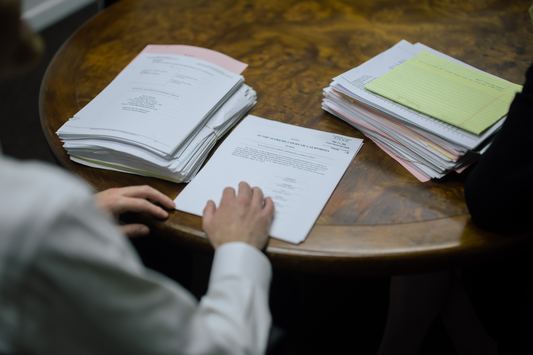
Defending against forgery charges is difficult, but criminal charges are merely allegations until they are proven by evidence presented in a courtroom during a trial. When fighting fraud charges, experienced Los Angeles forgery defense lawyers use a comprehensive approach which may include the following steps:
- Thorough Investigation — When appropriate, hiring outside private investigators, handwriting analysts, or other experts can substantially improve a client’s case. Using experienced criminal investigators helps us to identify ways to challenge the prosecution’s case and highlight deficiencies. For example, the identity of a witness who could testify about the accused being given verbal permission to sign a document could be discovered during the investigation.
- File Legal Motions to Dismiss — Prosecutors frequently add charges that are not appropriate or are inconsistent with the facts. Motions to dismiss these excessive charges can successfully limit your exposure or lead to a dismissal of all charges. (For more, see Legal Motions section below.)
- File Motions to Suppress Evidence — Evidence obtained by police and other law enforcement agencies must be the result of lawful searches and seizures. Documents are crucial pieces of evidence in forgery cases, but if they were obtained unlawfully, a motion to suppress could lead to a dismissal of the charges, an offer of a reduced charge or reduced sentence, or a better defense position at trial.
- Identify Lack of Fraudulent Intent — Prosecutors must prove you acted with fraudulent intent when committing the forgery, but the true facts might show otherwise. For example, if someone sent you a check but forgot to sign the check — and you sign the other person’s name — you could have a defense to forgery. In this example, the defense would be that you did not intend to defraud anyone; you were simply signing the other person’s name because they forgot to do so.
- Present a Valid Legal Defenses — Lack of intent to defraud, permission to commit the act, and coercion are some of the common defenses to forgery charges that will be covered in more detail later in the defenses section.
- Win the Case at Trial — Taking an aggressive approach is frequently the best defense in a criminal case. Prosecutors must prove your guilt beyond a reasonable doubt, so it is important for jurors to understand when evidence of intent to defraud is not present. Obtaining a not-guilty verdict at trial will eliminate the criminal case.

These steps are discussed in further detail throughout this article. They can make a world of difference to an individual facing forgery charges. Because forgery charges in California depend on the facts and circumstances of each case, seemingly innocent activities, such as signing your spouse’s name at the bank, can turn into life-altering criminal charges. For help finding qualified counsel for forgery charges, visit SPCRC's Recommended Lawyers.
- How to Fight Forgery Charges
- Forgery Laws and the Types of Forgeries
- Punishment for a Forgery Conviction
- Defenses against Forgery Charges
- Legal “Motions” and Other Actions
California Forgery Laws and the Types of Forgeries
Elements of the crime of forgery (PC 470)
Forgery is the unauthorized altering of a written document with the intent to defraud a person, organization or government entity.
Forgery is a form of fraud and is a crime under section 470 of the California Penal Code. Types of conduct prohibited by the law include the following:
- Signing another person’s name to a document
- Signing the name of a fictitious person
- Counterfeiting or forging another person’s handwriting or a seal belonging to another person or entity
- Altering, forging, counterfeiting, and other fraudulent acts involving checks, notes, or other instruments pertaining to financial transactions (See Penal Code § 470(d))
If you are charged with engaging in conduct prohibited under the forgery law, prosecutors must produce evidence at trial to prove each of the following elements of the crime:
- Permission or authorization to engage in the conduct was not given by the party having authority to give it
- You were aware you did not have permission to engage in the conduct
- You engaged in the conduct intending to defraud another person or organization (See Penal Code § 470(a))
It is not necessary for prosecutors to prove the intended fraud actually took place or that you profited from it. For example, if you take a blank check from a co-worker’s desk, list yourself as the payee, sign the account owner’s name to it and attempt to cash it at a local bank, it is not a defense to a forgery charge that you did not get any money because the teller recognized the signature as a fake.
The penal code lists specific documents that could give rise to forgery charges in addition to checks and promissory notes which people might normally associate with the crime. Included among those documents are the following:
- Lottery tickets
- Powers of attorney
- Last wills and testaments
- Vehicle or vessel ownership documents
- Mortgage satisfactions
- Stock certificates
- Money orders
- Leases
The broad scope of the California forgery laws pertaining to the alteration or falsifying of legal documents means someone in possession of a fake or altered driver’s license could be charged with a crime if the license is used to mislead police or others about the person’s age or identity.
Other Crimes Related to Forgery — PC 471.5, PC 529.5, PC 529.7, HS 11368, and PC 115
There are other acts related to or associated with the crime of forgery that are prohibited under state laws, including:
- Penal Code § 471.5: The alteration and modification of medical records with the intent to defraud is a crime chargeable as a misdemeanor.
- Penal Code § 529.5: The production, sale, or transfer of documents represented as being government-issued driver’s licenses or identification cards for purposes of deception is a crime punishable as a misdemeanor with fines up to $1,000 and up to one year in jail.
- Penal Code § 529.7: It is a misdemeanor to assist another person or to obtain for that person a driver’s license or government-issued identification card knowing the person is not entitled to it.
- Health & Safety Code § 11368: Forging or altering a prescription for a narcotic drug or using an altered or forged prescription to obtain narcotic drugs is a crime punishable by six months to one year in jail.
- Penal Code § 115: It is a felony in California to file a document knowing it to be false or forged. An example of this crime would be forging a property owner’s name on a deed and attempting to file it with the appropriate government office.
Obtaining a person’s signature on a document by misrepresenting the identity or nature of the document is forgery even though the signature is real. If someone believes they are renting property they own to another person, but the document they are given to sign is, in fact, a deed transferring it to the “tenant,” the person engaging in the deception could be charged with forgery.
The broad scope and complexity of the forgery laws in the state are illustrated by the fact a forged check could lead to criminal charges under the forgery statute for a person who did not actually forge the signature. If a person steals a check and forges the signature of the account holder on it without permission and with the intent of defrauding the account holder and the bank, it is clear the crime of forgery could be charged. However, if the person who put the signature on the check gives it to a friend who takes it to the bank knowing the signature is false, forgery charges could be filed against both of them under California Penal Code §§470 and 476.
- How to Fight Forgery Charges
- Forgery Laws and the Types of Forgeries
- Punishment for a Forgery Conviction
- Defenses against Forgery Charges
- Legal “Motions” and Other Actions
Punishment for a Forgery Conviction
Forgery Can Be Charged as a Misdemeanor or Felony
Forgery under Penal Code 470 (PC 470) is what is known as a “wobbler” offense in California. Prosecutors have the discretion to file charges as either felonies or misdemeanors. Factors coming into play to influence the decision include:
- Facts of the case
- Criminal history of the accused
Under new California law passed through Proposition 47, forgeries based on theft conduct need to be charged as misdemeanors if the amount in question is under $950 and if the defendant has a clean record.
Facts influencing the decision about the charges might include the harm done to victims, the severity of the criminal conduct, the number of people victimized, or the value associated with the forged item.
The experience and skill of your criminal defense attorney in bringing mitigating factors to the attention of prosecutors could persuade them to file misdemeanor instead of felony charges.
Criminal Penalties and Jail Imposed for Forgery Convictions
The penalties for forgery are determined by whether the crime is charged as a felony or misdemeanor and whether there are any “conduct enhancements to increase the punishment.”
Felony Forgery Punishment
- 16 months, 2 years, or 3 years in prison
- (2 or 4 years in prison for felony counterfeiting)
- Up to $10,000 fine
- 5 years probation
- Restitution
- Community service
Misdemeanor Forgery Punishment
- Up to 1 year in jail
- Up to $1,000 fine
- 3 years probation
- Restitution
- Community service
“Conduct Enhancements” Adding to Penalties
Conduct enhancements increase the amount of punishment if the crime included specific additional behavior.
- Causing loss over $500,000 (Penal Code §186.11(a)(2))
- Additional 2, 3 or 5 years prison
- Causing loss of $100,000 to $500,000 (PC §186.11(a)(3))
- Additional 1 or 2 years prison
- Committing forgery for criminal street gang (PC §186.22(b))
- Additional 2, 3 or 4 years prison
- Forging check to defraud victim of natural disaster (PC §667.17)
- Additional 1 year prison
** Note: None of the felony, misdemeanor, or enhancement punishments apply if a valid legal defense is presented or the case is otherwise won by the defense. Read about forgery defenses below.
Non-Jail Consequences of a Conviction
The difference between felony and misdemeanor charges is important because felonies involve longer prison sentences and higher fines, and they also cause a person to lose certain rights and privileges. Among the rights you could lose are the following:
- The right to own or possess a firearm
- The ability to qualify for certain professional licenses
- Your ability to receive a security clearance for work
A felony conviction could make it difficult to obtain a job or housing because there are employers and landlords who would choose someone without a criminal record before they would consider hiring or leasing to a convicted felon.
- How to Fight Forgery Charges
- Forgery Laws and the Types of Forgeries
- Punishment for a Forgery Conviction
- Defenses against Forgery Charges
- Legal “Motions” and Other Actions
Defenses Against Forgery Charges
The ability of the accused to rely upon a valid legal defense is critical in a criminal case because it usually results in a not guilty verdict after trial or an earlier dismissal of the charges. Some of the defenses the facts of a particular forgery case might support include:
- Lack of fraudulent intent — If you did not have the intention to defraud, you may have a valid defense to forgery charges. Perhaps you mistakenly thought you were authorized to sign a document from your boss or spouse. The burden is on prosecutors to prove fraudulent intent as an element of the crime, and evidence identified by the defense can help establish a lack of intent to defraud. This, like the other defenses, can result in a dismissal or an acquittal.
- Document Lacks Legal Significance — To be considered forgery, the document in question must have some sort of legal importance. Usually, forgery occurs when one party is trying to secure money or property from another. If the fraudulent document does not allow you any incentives, gains, or benefits, it could be argued that forgery did not take place because the document did not rob someone else of their legal rights or assets. For example, you may have copied a celebrity’s autograph to brag to your friends, without receiving any monetary benefit from the forgery. Here, the document lacking legal significance would be applicable.
- Consent — Actual authority to sign or commit the conduct was given by someone authorized to give it.
- Mistake — The person accused of committing forgery acted under the mistaken belief that permission to sign or alter a document was given by the individual with authority to give permission. For example, if a supervisor directed an employee to sign a check and the employee mistakenly signed the wrong check, the employee may have a valid defense to forgery charges.
- Lack of Legal Capacity — A person accused of forgery must possess the intent to carry out the act. Individuals suffering from a mental disorder might be incapable of understanding the nature of their actions, as would young children.
- Coercion: The fact that someone was forced through threats of physical harm to commit a crime could be presented to jurors to consider on the issue of intent.
- Documents Authorizing the Conduct — The existence of a “power of attorney” (i.e., a document authorizing one person to act for another person) or other document authorizing the accused to act on behalf of another person is an applicable defense.
- Business relationship — Partners, for example, have authority to sign contracts and other documents binding on their business and on each other. An existing business relationship can create authority to sign or modify a document. For example, a secretary may be authorized to sign the boss’s name on certain forms.
- Mistaken Identity — The facts might support a defense that the accused did not have knowledge of the criminal conduct or did nothing to assist the person who, in fact, committed the crime.
These forgery defenses will generally result in a not-guilty verdict or a case dismissal. A successful outcome depends in great part on whether your attorney has the experience and knowledge to argue the appropriate defenses. For help finding qualified counsel for forgery charges, visit SPCRC's Recommended Lawyers.
- How to Fight Forgery Charges
- Forgery Laws and the Types of Forgeries
- Punishment for a Forgery Conviction
- Defenses against Forgery Charges
- Legal “Motions” and Other Actions
Legal Motions To Improve Your Chance of Success in Court
Legal motions can lead to dismissal of charges or weakening of the prosecution’s case through the exclusion of improper evidence.
Motions are formal legal requests, usually submitted on paper with supporting affidavits and exhibits, made to the judge of the case. Motions ask the judge to take a certain action that the law requires or allows. Common motions that an experienced Los Angeles forgery defense attorney may file for a related case include:
- Motion to Dismiss: A motion to dismiss seeks to have the case or certain charges dismissed. A motion to dismiss the case or a count in a multi-count case can be based upon the following:
- failure of the evidence to establish probable cause to believe the defendant committed the offense charged
- lack of jurisdiction over the case
- failure of prosecutors to comply with the statute of limitations requiring charges to be filed and brought to trial within a specified time
- other legal grounds for dismissal that apply in the given circumstances
- Motion to Suppress Evidence — This is a request for the judge to exclude the use of evidence obtained by law enforcement in violation of the U.S. Constitution, the state constitution, and state laws. In forgery cases, much of the evidence could be documents seized following police searches. Suppression of that evidence would severely weaken the prosecution’s case against you or result in an inability of the prosecutor to continue the case.
- Motion to Suppress Statements Made to Law Enforcement — If you were improperly or illegally questioned by the police and made any statements, your attorney may ask the court to exclude the statement’s use against you. Law enforcement must follow rules established by the U.S. Supreme Court and state and federal constitutions regarding questioning of individuals suspected of committing a crime. Law enforcement is also required to respect your rights of privacy as outlined in existing law.
- Motion in Limine — Motions “in limine” (a motion to limit witness testimony or documentary evidence at trial) can be quite effective in forgery cases by prohibiting testimony that would be legally objectionable. Although an objection could be raised by defense counsel at trial, it might not undo the damage caused by allowing jurors to hear the false, misleading or improper testimony. For example, a pre-trial defense motion in a forgery case might challenge whether a prosecution handwriting expert has the proper credentials and training to testify as an expert.
- Motion directed at improper charges — Overcharging is a tactic used by some prosecutors who may file as many charges as possible against a person even if not all of them are supported by the evidence. Motions to dismiss directed at improperly filed charges help to reduce penalties to which the accused is exposed. It might also compel a prosecutor to offer a plea or sentence favorable to the accused.
To learn more about legal motions that may apply to your case, contact an experienced Los Angeles forgery defense attorney for a consultation.
Winning a Forgery Trial
Taking a trial-focused approach on forgery cases can often provide the best likelihood of a not-guilty verdict. Important steps to take include:
- Articulating Mistakes in Prosecution’s Case — The burden is on the prosecution to prove you committed forgery and had the intent to defraud. They must prove each and every element of the forgery beyond a reasonable doubt. If they fail to do that, and your attorney effectively points this out to the jury, you must be found not guilty.
- Raising Legal Defenses — An “affirmative defense” is essentially the same as saying that the technical forgery occurred but there is a valid legal reason for the act to have been committed. See the legal defenses listed in the above section on defenses. A successful affirmative defense generally leads to a not guilty verdict.
- Using Investigators and Expert Witnesses — Expert witnesses are crucial to forgery cases for both the prosecution and defense. In certain cases, it is crucial to retain the services of forgery investigators capable of finding mistakes in the prosecutor’s case and finding evidence supporting the defense. Also appropriate might be handwriting and document experts to present the defense side of the story and to challenge improper claims by the prosecution.
- Hire an Experienced Forgery Attorney — Winning at trial begins with the person you choose as your defense lawyer. A good criminal defense attorney with direct experience handling forgery cases, especially one who formerly prosecuted forgery, will provide you with the greatest chance of success. Experienced Los Angeles criminal defense lawyers who are former prosecutors are regularly sought out on a wide array of forgery-related cases.
Why Trust an Experienced Los Angeles Forgery Defense Attorney
Whether you are under investigation for forgery or already charged with the crime, your best chance of success is with an attorney who knows how to fight and win forgery cases.
Experienced forgery defense attorneys who are former prosecutors and served as Assistant District Attorneys bring valuable insight to defense cases. The strategies outlined in this article are a sample of some of the steps experienced attorneys take to defend clients charged with forgery.
For help finding qualified counsel for forgery charges, visit SPCRC's Recommended Lawyers.